
Housing
The centre of Almoradí was rebuilt after 1829 on a strict grid. Most homes here are town houses, older family houses with an inner courtyard and apartment blocks of several storeys. Living in the centre means you can walk to the shops, schools and the main square.
Around the town are eight outlying districts (pedanías) in the farmland:
- El Saladar, the largest, with its own village life
- Heredades, shared with neighbouring Rojales, with semi-detached homes among other types
- La Cruz de Galindo, Puente Don Pedro, La Eralta, La Erica, El Raiguero and Lomas de la Juliana, small hamlets and scattered farmhouses
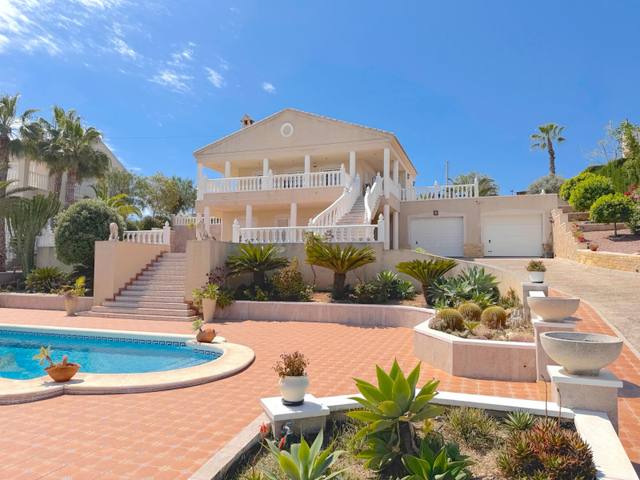
Outside the centre, detached country houses and fincas among the orchards dominate. That brings peace and space, but you will depend on a car. Almoradí is not a typical holiday urbanisation; it feels like a Spanish town where people live all year round.
Work and economy
Farming has always been the backbone. The town is surrounded by a large area of irrigated farmland growing mostly citrus (lemons, oranges and mandarins), artichokes and vegetables. The artichoke even has its own annual congress in the town.
Almoradí is also known for its furniture trade, with large showrooms. A large share of the working population is in services: retail, hospitality, education and care. There are business parks on the edge of town, and in 2026 the council announced plans for additional industrial land.
For work in other sectors many people commute to Orihuela, Torrevieja, Elche or Alicante. That is difficult without a car, as public transport in the area is limited. Remote workers can live here quietly and at relatively modest cost.
Population
According to the municipal register, around 23,400 people were registered at the end of 2025, almost 500 more than a year earlier. The official INE figure for 1 January 2024 was approx. 22,500. Growth has been steady for years. Roughly one in four residents holds a foreign nationality. The largest group is Moroccan (approx. 3,100 people), followed by British (approx. 600) and Colombian (approx. 550) residents.
Unlike the coastal towns, the population here is fairly young and mostly Spanish. Daily life happens in Spanish, and that is also the language that will get you furthest in shops and at the town hall. For families this means a genuinely Spanish environment for the children; if you speak little Spanish, expect to put real effort into learning it to feel at home.
Schools and education
Almoradí offers a full range of education up to the age of eighteen:
- Nursery (0–3): including the private nursery Las Casitas
- State primary schools (CEIP): Canales y Martínez, Manuel de Torres, Pascual Andreu and Heredades
- CEIP nº 4: a new state primary school on the road to Algorfa, planned for the 2026-2027 school year
- Santa María de la Huerta: a state-funded private school (concertado), also offering secondary education (ESO)
- Secondary schools (IES): Antonio Sequeros and Azud de Alfeitamí
The existing primary schools have been full in recent years, which is why the new school was built. Teaching is mainly in Spanish, with Valencian and English as subjects. There is no international school in the town itself; for that you will need to travel elsewhere in the region.
Distances from the centre
| Supermarket | approx. 0.5 km |
| Health centre (Calle Mayor) | approx. 0.5 km |
| Pharmacy | approx. 0.3 km |
| Primary school | approx. 0.5 km |
| Beach (Guardamar del Segura) | approx. 15 km, 20 min |
| Golf course (La Finca, Algorfa) | approx. 6 km, 10 min |
| Hospital (Hospital Vega Baja, Orihuela) | approx. 7 km, 10 min |
| Torrevieja | approx. 20 km, 25 min |
| Alicante (city) | approx. 55 km, 45 min |
| Alicante-Elche airport | approx. 40 km, 35 min |
| Murcia airport (Corvera) | approx. 60 km, 45 min |
Shops and markets
You do not need to leave town for everyday shopping. In and around the centre there are supermarkets, bakeries, butchers, pharmacies and plenty of small independent shops. Almoradí also has a strong name in the furniture trade, with showrooms that draw people from the surrounding towns.
The highlight of the week is the Saturday market. It has more than three hundred stalls and stretches for over a kilometre through the streets around Plaza de la Constitución. You can buy fruit and vegetables from the local farms, flowers, shoes, clothing and regional products. Arrive early, as it gets busy and parking becomes difficult. For large shopping centres you will drive to Orihuela, Torrevieja or Elche.
Culture and sights
The history of Almoradí centres on the earthquake of 21 March 1829, which killed almost two hundred people. The engineer José Agustín de Larramendi then designed a new town with wide, straight streets, intended to be safer.
- Plaza de la Constitución: the large square with large old ficus trees, the heart of the town
- Church of San Andrés: the main church, built after the earthquake and protected as a local monument
- Teatro Cortés: a theatre from 1908 that is still in use
- Casino and the former hospital: buildings from the early twentieth century
- Earthquake Museum: an immersive museum about the disaster in a rebuilt house
- Alfeitamí mill: an old watermill on the Segura
Local festivals
| Festival | When | What |
|---|---|---|
| Feria y Fiestas de Moros y Cristianos (San Abdón and San Senén) | late July, around the feast day on 30 July (about six days) | Parades by the comparsas, night-time entries, fireworks, open-air dances and donkey races; declared of provincial tourist interest in 2026. |
| Semana Santa (Holy Week) | March or April | Processions by the brotherhoods through the streets of the centre. |
| Cruces de Mayo | 1 May | On the main square, last year's willow crosses are burned and new ones are blessed. |
| Congreso Nacional de la Alcachofa | spring, often March | A weekend devoted to the artichoke, with tastings, tapas, music and activities around Plaza de la Constitución. |
| San Andrés and Medio Año Festero | 30 November | Feast day of the patron saint, when the Moors and Christians associations gather halfway through the festive year. |
Healthcare
The Centro de Salud de Almoradí is on Calle Mayor in the centre and belongs to the Orihuela health department of the Valencian health service. It offers GP, paediatric, nursing and social work services, along with radiology and mental health care. Visits are by appointment. There is also a smaller clinic (consultorio) in Heredades, shared with Rojales.
The main hospital is Hospital Vega Baja in San Bartolomé (Orihuela), around 7 km away. For some specialties you will need to go to Orihuela or Callosa de Segura. These places are poorly served by public transport, so plan on using a car. A day clinic for child and adolescent mental health is being built in the former bus station. There are enough private clinics and dentists in the town.
Outdoor leisure
The flat farmland around Almoradí is ideal for walking and cycling between orchards and irrigation channels. The council has waymarked walking and cycling routes through the huerta and along the water. Along the Segura you can cycle further towards the coast.
In town there are several parks and playgrounds. For sport there is a football stadium, a sports complex and a sports hall, plus a large number of sports clubs. La Finca golf course lies just across the boundary in Algorfa, and the beaches of Guardamar and Torrevieja are roughly twenty to twenty-five minutes by car. Bear the summer heat in mind: in July and August it is best to be active early in the morning or in the evening.
Indoor leisure
The Teatro Cortés, dating from 1908, has a regular programme of plays, concerts and shows. The Earthquake Museum takes small groups through the story of the disaster with sound, film and even scents. Booking is required, and it is suitable for children from about eight years old.
There are also gyms, the music school and a good number of clubs and associations, from sport to volunteering. Around the square you will find cafés and restaurants where you can try local cooking with artichokes and vegetables from the surrounding farms. For a cinema or a large shopping centre, head to Orihuela, Torrevieja or Elche.