
Housing
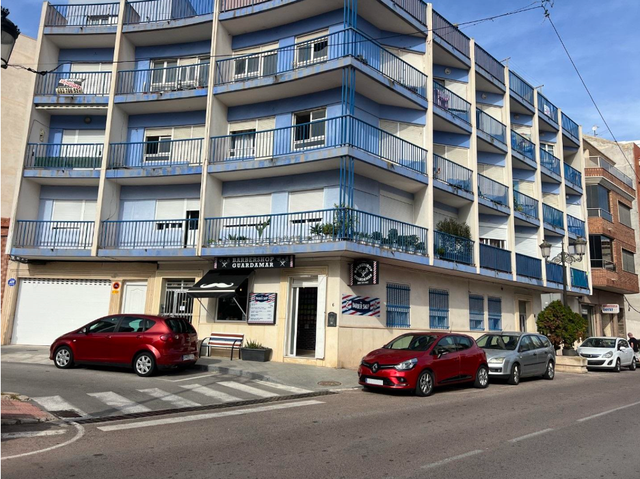
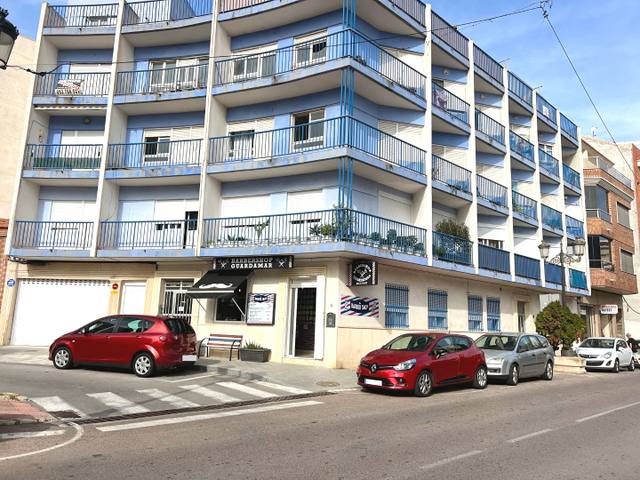
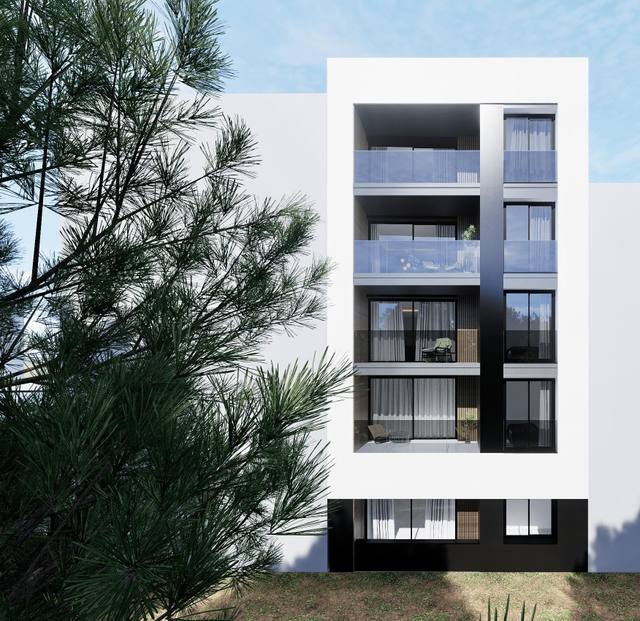
The old centre around the town hall and church is made up of town houses and apartment blocks within walking distance of the beach and the park. South of the centre are coastal districts such as El Moncayo and El Campo, with many apartments and terraced houses close to the sea, a good share of them used as holiday homes.
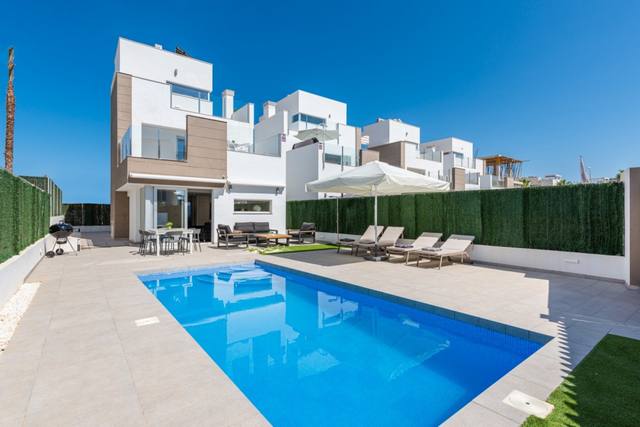
Further inland lie urbanisations such as El Raso, Lomas de Polo-Pinomar, Costa Bella, Los Estaños and Los Secanos. Here you mainly find bungalows, linked houses and detached villas with gardens, plus recent new-build developments with communal pools.
- Centre: lively, everything on foot, less parking.
- Coastal districts: close to the beach, busy in summer and quieter in winter.
- Urbanisations: calmer and more spacious, but you rely more on a car.
Work and economy
Tourism is the main driver of the local economy and has also fuelled strong growth in construction. Hospitality, rentals, retail, home and pool maintenance and building work therefore provide most jobs, with a clear peak in the summer months.
Irrigated farming continues on the plain along the Segura, growing ñora peppers, melons and citrus among other crops. Traditional prawn and eel fishing has largely disappeared, with offshore fish farming partly taking its place. In the north of the municipality there is a car battery factory, one of the few large industrial employers in the area.
Many residents commute to Torrevieja, Elche or Alicante for office jobs. It is a pleasant base for remote workers, but bear in mind that the local job market is limited and seasonal.
Population
Guardamar had approximately 18,600 residents at the start of 2025. That is almost double the figure around 2000, when there were roughly 10,000. In summer the number of people in the municipality is considerably higher because of tourists and second-home owners.
About a third of residents were born abroad (approx. 35% in 2022). The largest group comes from the United Kingdom, followed by Russia, Ukraine, Morocco and Bulgaria; there are also German and French residents.
Language is a distinctive feature: Guardamar is the southernmost town where Valencian has traditionally been spoken, and the only one in the Vega Baja. Spanish dominates on the street, but Valencian plays a clear role at school and in local government.
Schools and education
Guardamar offers a complete state education pathway up to the end of secondary school:
- Nursery: the municipal Escola Infantil L'Escoleta (ages 0 to 3).
- Primary schools (CEIP): Reyes Católicos, Molivent and Dama de Guardamar, each covering infant and primary years.
- Secondary (IES): IES Les Dunes and IES Enric Valor, offering ESO and bachillerato.
As elsewhere in the Valencian Community, lessons are taught in Spanish and Valencian, with English as an additional language. Children who join later often find Valencian the hardest part; ask what support the school offers when you enrol. International or English-language private schools are not in the municipality itself but in the wider area, roughly 15 to 30 minutes by car. For university, students go to Elche or Alicante.
Distances from the centre
| Supermarket | approx. 0.5 km |
| Health centre (Centro de Salud Integrado) | approx. 1 km |
| Pharmacy | approx. 0.3 km |
| Primary school | approx. 0.5 to 1 km |
| Beach (Playa Centro) | approx. 0.5 to 1 km |
| Golf course (La Marquesa, Ciudad Quesada) | approx. 10 km, 15 min |
| Hospital (Hospital Universitario de Torrevieja) | approx. 18 km, 20 min |
| Torrevieja | approx. 17 km, 20 min |
| Alicante (city) | approx. 37 km, 35 min |
| Alicante-Elche Airport | approx. 30 km, 25 to 30 min |
| Murcia Airport (Corvera) | approx. 70 km, 50 min |
Shops and markets
Everyday shopping is close at hand in the centre: supermarkets, bakers, butchers, pharmacies, banks and a wide choice of cafés and restaurants. Larger supermarkets and DIY stores sit along the main roads; for shopping centres and big chains you drive to Torrevieja or Elche.
- Wednesday market: the main weekly market, held from about 8 am to 2 pm on the La Redonda car park, with fruit, vegetables, clothing and household goods.
- Sunday market: a smaller market on Sunday mornings.
- Craft market: on Paseo Ingeniero Mira, open every evening until late from mid-June to mid-September, and mainly at weekends around Easter and the rest of the year.
Local specialities include Guardamar prawns (langostinos) and produce from the surrounding market gardens.
Culture and sights
Guardamar has a long history that you come across everywhere. Near the river mouth stood the Phoenician port of La Fonteta, dating from around the 8th to 6th centuries BC. In the dunes lies the Rábita Califal, a 10th-century religious complex regarded as one of the oldest of its kind in Spain.
- Castle: remains of the fortress on the hill above the town, with views along the coast. Its upper part was largely destroyed in the 1829 earthquake.
- Archaeological Museum: in the old quarter, displaying local finds including the Iberian Dama de Guardamar.
- Casa Museo Ingeniero Mira: home of the engineer behind the dune forestation, now also the tourist office.
- Molino de San Antonio: a mill from around 1915 with neo-Moorish windows.
Local festivals
| Festival | When | What |
|---|---|---|
| Semana Santa | Holy Week | Processions by several religious brotherhoods through the town centre. |
| Hogueras de San Juan | Around 24 June | Bonfires and celebrations on Midsummer night, including the burning of figures. |
| Moros y Cristianos | Last two weeks of July, around Sant Jaume (25 July) | More than a week of costumed Moorish and Christian parades, music and staged battles. |
| Fiestas Patronales (Virgen del Rosario) | Around 7 October | Celebrations for the town's patron saint with a procession, religious services and events in town. |
Healthcare
Guardamar falls under the Departamento de Salud de Torrevieja and forms its own health zone within it. The municipality has the Centro de Salud Integrado de Guardamar del Segura and a smaller health post (consultorio) in El Campo. The main centre has GPs, paediatricians and nurses, plus an X-ray unit. You register using the SIP card.
The reference hospital is Hospital Universitario de Torrevieja, around 20 minutes by car, where A&E is based. In summer the department brings in extra staff and keeps emergency points in the area open for longer. There are also private clinics, dentists and physiotherapists in and around Guardamar.
Bear in mind that services are busier in high season and that the hospital is harder to reach without a car.
Outdoor leisure
The coast is the big draw: approximately 11 km of sand, from Playa del Rebollo north of the river mouth to Les Ortigues at the boundary with Torrevieja. Playa Centro, La Roqueta and El Moncayo have flown the Blue Flag for many years.
Behind the beach lies a pine forest of around 800 hectares, planted in the early 20th century to stabilise the shifting dunes. Parque Alfonso XIII and Parque Reina Sofía, with ponds and plenty of shade, are ideal for walking, running or playing with children.
- Cycling and walking along the Segura and through the dunes.
- Water sports and fishing near the river mouth and the Marina de las Dunas.
- The La Mata and Torrevieja salt lakes are close by.
The climate is dry and sunny, with hot summers averaging around 31 °C in August. Expect crowded beaches and scarce parking in July and August.
Indoor leisure
For a rainy day or the hottest afternoons, Guardamar offers mainly small-scale facilities. The Archaeological Museum and Casa Museo Ingeniero Mira combine well with a stroll around the centre. The town has a public library and a music school, and runs indoor sports for children and adults through its municipal sports schools.
- Plenty of cafés and restaurants, many open out of season too.
- Private gyms and classes such as yoga or dance.
- Associations and clubs where it is easy to meet other newcomers.
For a cinema, a large shopping centre or a broader cultural programme you drive to Torrevieja, Elche or Alicante, all within about half an hour.