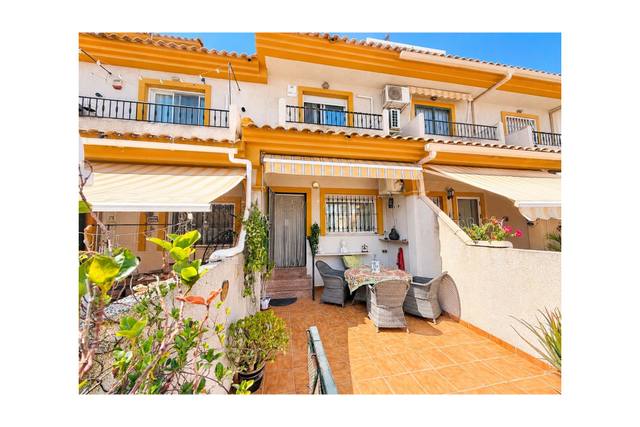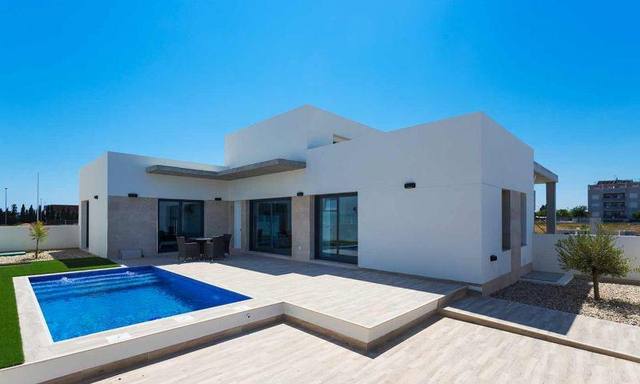

Housing
Daya Nueva is compact: a village core around the church and town hall, surrounded mostly by farmland. The municipality also includes the hamlet of Puebla de Rocamora, which was a separate municipality until 1974, and the La Bodega neighbourhood with its own chapel.
- Village centre: traditional village houses and terraced houses, often with a roof terrace, plus a few small apartment blocks.
- Edges of the village: some newer terraced and detached homes.
- Countryside: country houses and fincas among the orchards, with more land but further from amenities.
You will not find large resort-style urbanisations here, as you do in Rojales or Torrevieja. Bear in mind that the Vega Baja is low and flat, and parts of the area flooded during the severe storm of September 2019. Ask about the flood risk of any plot before you buy.
Work and economy
The local economy has always been based on irrigated farming. Oranges, lemons, artichokes, broccoli, potatoes and alfalfa are grown around the village. Beyond that, the village has mainly small businesses: bars and restaurants, bakeries, a butcher, a hardware shop and furniture stores.
Most employees commute. Almoradí is next door, and Orihuela, Torrevieja and Elche are all within easy reach by car. Many foreign residents work remotely or are retired. In practice you will need a car for work, as public transport is limited to a handful of bus connections.
Population
Daya Nueva had around 1,900 residents at the start of 2025, slightly more than a decade earlier. The village grew up in the Middle Ages around a fortified manor house and became a barony in the 16th century. Until 1857 it formed a single unit with the even smaller Daya Vieja.
Just over a quarter of residents hold a foreign nationality (approx. 28% in 2022, mainly British and Moroccan). That is lower than in the coastal towns, so daily life remains distinctly Spanish: in the street, in the shops and at school you will mostly hear Spanish. Some basic Spanish makes dealing with neighbours and the town hall much easier. Locals are known as dayeros.
Schools and education
The village has one state primary school, CEIP La Inmaculada, covering infant and primary education for children aged 3 to 12. For childcare for the very young, ask at the town hall. At a small village school, newcomers usually settle in quickly and pick up Spanish.
For secondary education, pupils go to IES Azud de Alfeitamí in Almoradí, to which the village primary school is linked. There are no international or English-language schools in the immediate area; for those you would look towards the coast or to Alicante and Elche. In the Valencian Community, children are taught Valencian as well as Spanish.
Distances from the centre
| Supermarket | in the village or Almoradí, approx. 0.5–3 km |
| Health centre | local surgery in the village; Almoradí health centre approx. 3 km |
| Pharmacy | in the village or Almoradí, approx. 0.5–3 km |
| Primary school (CEIP La Inmaculada) | approx. 0.5 km |
| Secondary school (IES Azud de Alfeitamí, Almoradí) | approx. 4 km, 7 min |
| Beach (Guardamar) | approx. 13 km, 15 min |
| Golf course (La Marquesa, Ciudad Quesada) | approx. 9 km, 12 min |
| Hospital (Hospital Vega Baja, Orihuela) | approx. 12 km, 15 min |
| Torrevieja | approx. 22 km, 25 min |
| Alicante (city) | approx. 50 km, 40 min |
| Alicante-Elche airport | approx. 37 km, 35 min |
| Murcia airport (Corvera) | approx. 60 km, 45 min |
Shops and markets
Everyday shopping can be done in the village, which has small shops for everyday needs, such as a bakery, a butcher and a hardware shop. For a bigger weekly shop, clothes or electronics you will drive to Almoradí, which has far more shops and supermarkets.
The main weekly market in the area is Almoradí on Saturday mornings, with produce from the local huerta, clothing and household goods. On Mondays there is a smaller market in Formentera del Segura, about 5 minutes away. For large shopping centres, head to Torrevieja, Orihuela Costa or Elche.
Culture and sights
The most important building is the 18th-century parish church of San Miguel Arcángel, enlarged in the mid-20th century with a transept and a dome. The La Bodega neighbourhood has the chapel of Nuestra Señora del Rosario (1960), and Puebla de Rocamora has a chapel dedicated to the Virgen del Carmen.
Archaeologically, Daya Nueva is known for an Iberian funerary monument from the 5th or 4th century BC, discovered by chance in 1992. The village also has a small cultural hall, a library, and a music school. The food is typical of the Vega Baja: cocido con pelotas, rice dishes and sweets such as almojábanas and tortada.
Local festivals
| Festival | When | What |
|---|---|---|
| Romería de San Isidro (Puebla de Rocamora) | around 15 May | The patron saint is carried in procession to the chapel, followed by an open-air mass and a shared lunch. |
| Fiestas patronales of San Miguel Arcángel | second half of September, main day 29 September | The biggest celebration of the year, with parades, floats, open-air dances, children's events, a flower offering, fireworks and the procession for the patron saint. |
| Fiestas de La Bodega (Virgen del Rosario) | early October (around 7 October) | A neighbourhood festival with a mass, hot chocolate with buñuelos and an evening procession. |
| Inmaculada Concepción | around 8 December | Religious celebrations for the village's patroness. |
Healthcare
Daya Nueva has a consultorio auxiliar, a small GP surgery that comes under the Almoradí health centre. For a wider range of primary care, and for urgent care outside the surgery's opening hours, you go to the Almoradí health centre, approx. 3 km away.
For specialist care Almoradí refers patients to the public Hospital Vega Baja near Orihuela (San Bartolomé), approx. 12 km or 15 minutes by car. Torrevieja University Hospital is further away, at about 22 km, and Torrevieja and Orihuela also have several private clinics with English-speaking staff. Registration with the public health service is through the SIP card; if you are a pensioner from an EU country or the UK, check which form you need.
Outdoor leisure
The flat landscape around the village is ideal for walking and cycling. The town hall has mapped quiet farm tracks (veredas) between the orchards and fields, including a route past orange and lemon trees. In spring the whole huerta smells of orange blossom.
- Municipal open-air swimming pool, football pitch and sports court in the village
- Parks such as Parque María del Carmen Baeza and Parque de la Paz, plus a recreation area in Puebla de Rocamora
- The beaches and dunes of Guardamar about 15 minutes away
- El Hondo nature reserve and the Torrevieja and La Mata salt lakes within half an hour, good for birdwatching
Summers are hot, with days above 35 degrees, so outdoor exercise is best early or late in the day.
Indoor leisure
Indoor options in the village are modest but practical: a sports hall, a private gym, the public library, a cultural hall that hosts performances and activities, and a music school. Local clubs and associations, from the music society to the volleyball club, are a good way to meet people.
For cinema, theatre, bowling or a wider choice of restaurants, you will drive to Torrevieja, Orihuela, Elche or the La Zenia Boulevard shopping centre on the coast. Almoradí also has its own theatre and more bars and restaurants. Evenings in Daya Nueva are quiet, which for many residents is exactly why they live here.