
Housing
Dolores is a compact municipality without separate pedanías or large urbanisations. Almost all homes are in and around the town itself, which still follows its 18th-century grid of streets.
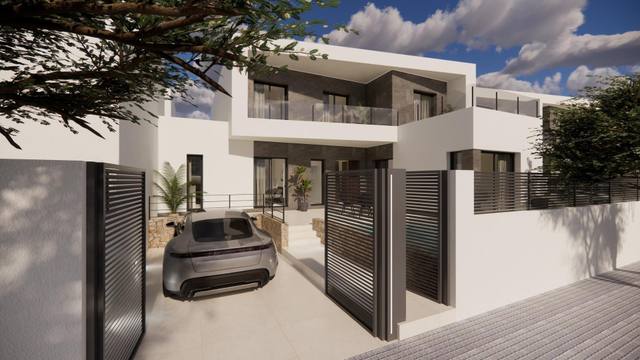
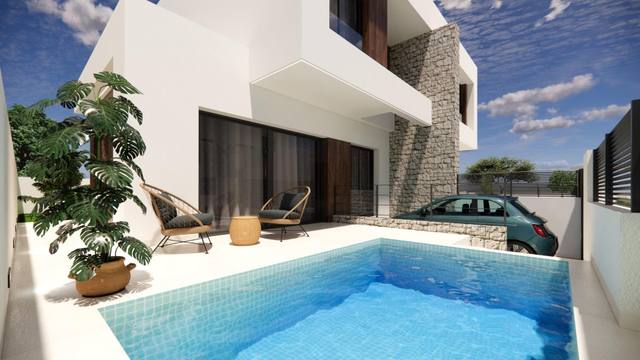
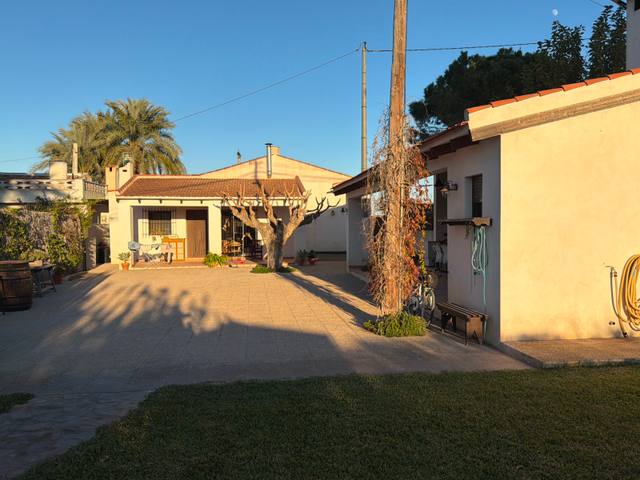
- Old centre: traditional town houses, often with a patio or roof terrace, and small apartment blocks around the central square.
- Edges of town: terraced and semi-detached houses plus some new-build developments, sometimes with a communal pool.
- Huerta: scattered country houses and fincas among the fields, peaceful but car-dependent.
The large Dolores Golf scheme received its approvals between 2005 and 2008 but was never built. Property is generally cheaper than on the coast, and you live among Spanish neighbours rather than in a holiday setting.
Work and economy
The local economy rests mainly on services, construction and farming. The fertile huerta produces artichokes, melons, beans and citrus fruit.
Many residents work outside the town: in Elche (industry, trade, university), in Almoradí, or in hospitality and construction on the coast around Guardamar and Torrevieja. The AP-7 and the road to Elche put those jobs within easy reach. For remote workers it is a quiet base. Do expect to need a car for any job outside the town, as public transport is limited.
Population
On 1 January 2024 Dolores had about 8,100 residents (INE), nearly 200 more than a year earlier, and it has grown steadily for years. According to the 2022 register, roughly one in five residents was born abroad. Morocco is the most common country of birth, followed by the United Kingdom and, some way behind, France and Colombia.
The town feels distinctly Spanish and agricultural, with an active community life and a busy festival calendar. Spanish is the everyday language; Valencian is hardly spoken here. Some basic Spanish makes dealing with neighbours, schools and the town hall much easier.
Schools and education
For a town of this size the choice of schools is good:
- Nursery (0–3): a municipal escuela infantil and the private nursery Tu Casita.
- Primary: three state schools (CEIP San Francisco de Asís, CEIP Cardenal Belluga and CEIP Virgen de los Dolores).
- Secondary: the state secondary school IES San Pascual.
- Adults: a municipal adult education centre and a music school.
Teaching is mainly in Spanish, with Valencian and English as subjects. There are no international schools in Dolores; for those you would drive towards the coast or Elche. Young children usually settle into a local school quite quickly.
Distances from the centre
| Supermarket | approx. 0.5 km |
| Health centre | approx. 0.5 km |
| Pharmacy | approx. 0.3 km |
| Primary school | approx. 0.5 km |
| Beach (Guardamar del Segura) | approx. 14 km, 15 min |
| Beach (La Marina, Elche) | approx. 13 km, 15 min |
| Golf course (La Marquesa, Rojales) | approx. 10 km, 12 min |
| Hospital (Hospital Vega Baja, Orihuela) | approx. 12 km, 15 min |
| Elche (city) | approx. 22 km, 20 min |
| Torrevieja | approx. 27 km, 25 min |
| Alicante (city) | approx. 45 km, 35 min |
| Alicante-Elche Airport | approx. 35 km, 30 min |
| Murcia Airport (Corvera) | approx. 70 km, 50 min |
Shops and markets
The town covers everyday needs: supermarkets, bakers, butchers, pharmacies, banks and a range of small shops and bars around the centre.
Every Friday morning (roughly 8am to 1pm) a weekly market of about a hundred stalls sets up on Avenida Alcalde José Rodríguez, selling local fruit and vegetables, clothing and household goods. Local produce worth looking out for includes artichokes, melons, dates and figs.
For bigger shopping trips you head to Almoradí, Elche or the shopping centres around Torrevieja and Orihuela Costa, each a short drive away.
Culture and sights
Dolores dates from the early 18th century. From 1715 Cardinal Luis Belluga had marshland in the Vega Baja drained and founded new villages there, alongside San Felipe Neri and San Fulgencio. King Felipe V confirmed the land grant in 1724.
- Church of Nuestra Señora de los Dolores: the parish church, built 1743–1745 in a style between late Baroque and Neoclassicism, with a statue of the patron saint by Salzillo.
- The central square: the heart of the town, beside the church.
- Museo de la Huerta: a small museum about rural life in the area.
- "1715" heritage route: an occasional costumed walk through the town's history.
Local cooking is hearty and rooted in the huerta: cocido con pelotas, arroz con costra and arroz con conejo.
Local festivals
| Festival | When | What |
|---|---|---|
| Fiesta Gastrocultural de la Alcachofa | spring (March or April) | A celebration of the local artichoke, with tastings and a contest for the best artichoke tortilla. |
| Medio Año Festero | spring, usually March | A mid-year taster of the September fiestas, with its own events. |
| FEGADO, Feria de Ganado | around the first weekend of August (several days, starting late July) | A large livestock and horse fair with Spanish horse shows, pulling contests, dressage, sheep-shearing and open-air dances; recognised as a festival of regional tourist interest. |
| Feria y Fiestas Patronales (Virgen de los Dolores) | mid-September (feast day 15 September) | The main town festival, with the crowning of the festival queens, decorated streets, a paella contest, a colourful float parade and a procession. |
| Christmas | December to 6 January | Festive season with a competition for decorated balconies, façades and shop windows. |
Healthcare
Dolores has its own centro de salud with GPs, a paediatrician, nursing, antenatal care, blood tests and minor procedures. It belongs to the Orihuela health department (Departamento de Salud de Orihuela).
The public reference hospital is Hospital Vega Baja in San Bartolomé (Orihuela), about 12 km or a quarter of an hour by car, with an A&E department. Private hospitals and clinics are in Elche and Torrevieja. Specialist appointments therefore mean a drive. Once you are on the padrón and in the Spanish social security system you can register with a GP here.
Outdoor leisure
The town is surrounded by the huerta, a flat landscape of fields, irrigation channels (acequias and azarbes) and farm tracks. It is ideal for walking and cycling, especially in the cooler months.
- El Hondo Natural Park: a large wetland just to the north, known for birds such as flamingos and herons.
- Coast: the beaches, dunes and pine woods of Guardamar and La Marina are about 15 minutes away.
- Golf: several courses nearby, such as La Marquesa in Rojales.
To be fair, summers are hot and humid, there is little shade in the huerta, and mosquitoes can be a nuisance near the wetlands.
Indoor leisure
Within the town the options are modest but useful: a public library, the Museo de la Huerta, a municipal sports centre and cultural activities run by the many local associations, such as the music school and festival groups.
For cinemas, theatre, larger gyms and shopping centres you go to Elche or Torrevieja, each 20 to 25 minutes away. Social life mostly happens on café terraces, in bars and during the many town festivals.