
Housing
The old centre around the church and the Plaza de la Constitución is made up of narrow streets of traditional village houses, often with a roof terrace. Much of the village was rebuilt after the 1829 earthquake, so genuinely old buildings are rare.
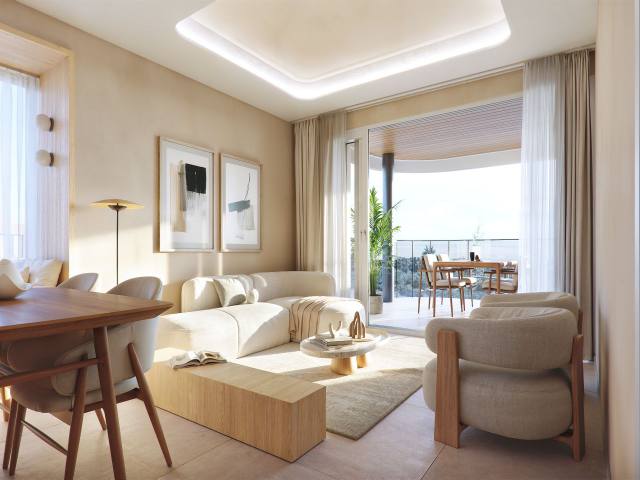
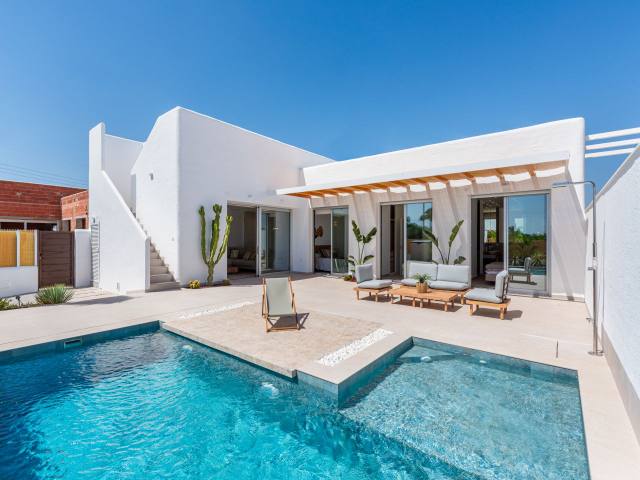
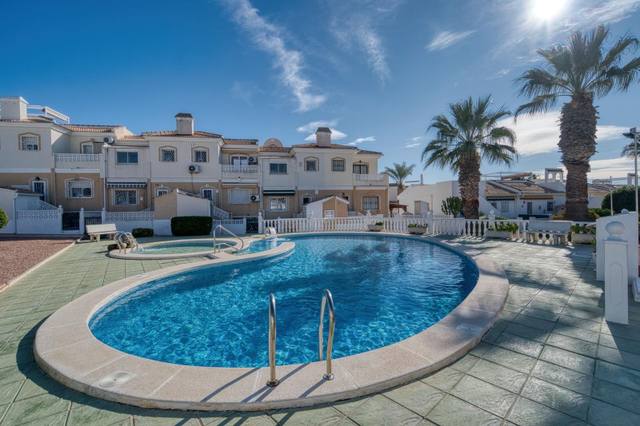
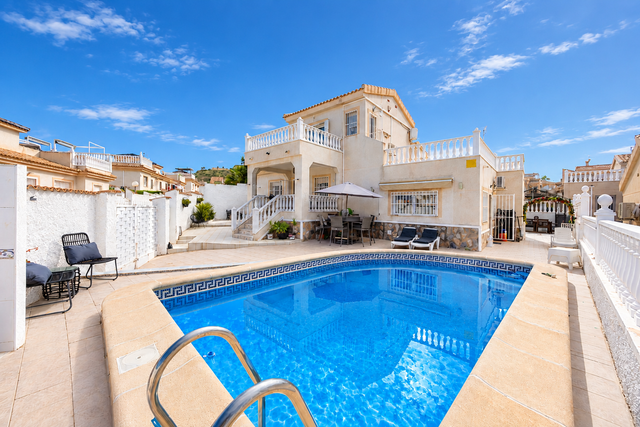
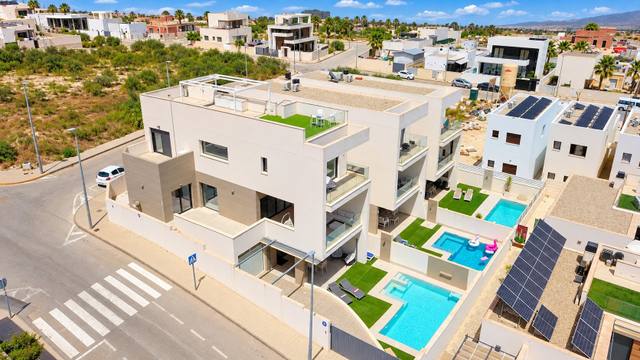
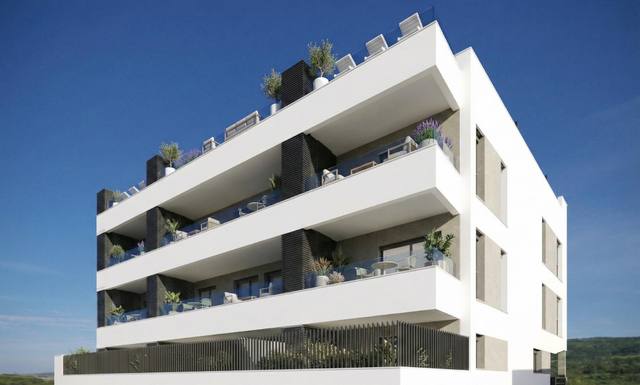
Over recent decades new districts have grown up around the core, with terraced houses, linked bungalows, apartments in small complexes with a shared pool, and detached villas on larger plots. New builds are still being completed.
- Village centre: village houses and apartments, everything within walking distance.
- Benimar: a villa area on the edge of the village towards Ciudad Quesada, quieter and more car-dependent. As it lies close to the municipal boundary, it is worth checking the municipality for each individual address.
- Edges of the village: newer terraced houses and apartments.
Because the municipality is so small, some estates that appear to belong to Benijófar on a map actually fall within Rojales or Algorfa. Always check which municipality a property is registered in before you buy.
Work and economy
Benijófar has traditionally relied on farming. The irrigated huerta along the Segura produces vegetables such as artichokes, potatoes and broccoli, as well as citrus fruit, watered through a centuries-old network of channels.
Today the village lives mainly from construction, services and its many foreign residents: hospitality, property and pool maintenance, estate agencies and small shops. There are no large employers. Salaried jobs are easier to find in Torrevieja, Orihuela, Elche or Alicante, and nearly everyone commutes by car. For remote workers, the quiet village with good links via the AP-7 and the CV-905 is a practical base.
Population
On 1 January 2025 Benijófar had approximately 3,700 registered residents. The population has grown strongly since the 1980s, largely thanks to foreigners living here full-time or for part of the year.
According to INE figures for 2022, around half of registered residents held a foreign nationality. British nationals are by far the largest group. English is widely heard in the street. In summer and over the holidays, the number of people actually in the village is noticeably higher than the official figure.
The Spanish community is close-knit and keeps the traditional fiestas alive; learning Spanish makes it much easier to take part in village life.
Schools and education
The village itself has two state-run facilities:
- EI Municipal Las Cinco Cuevas: municipal nursery for the youngest children (Calle Miguel de Cervantes).
- CEIP San Jaime: state infant and primary school (Calle Francisco Ribera Pérez).
Teaching is bilingual in Spanish and Valencian, with English as a subject. Young children usually pick up the languages quickly; the move is harder for older children.
For secondary education (ESO and bachillerato), pupils attend an instituto in a neighbouring municipality, which means a school bus or a lift. International schools teaching in English are found in the wider area, including towards Torrevieja, Orihuela Costa and Elche, and usually involve a drive of half an hour or more.
Distances from the centre
| Supermarket | approx. 0.5 km |
| Consultorio (local GP surgery) | in the village, approx. 0.5 km |
| Rojales health centre | approx. 3 km, 5 min |
| Pharmacy | in the village, approx. 0.5 km |
| Primary school (CEIP San Jaime) | approx. 0.5 km |
| Beach (Guardamar del Segura) | approx. 11 km, 13 min |
| Golf course (La Marquesa, Ciudad Quesada) | approx. 4 km, 6 min |
| Hospital (Hospital Universitario de Torrevieja) | approx. 17 km, 20 min |
| Torrevieja (centre) | approx. 18 km, 22 min |
| Alicante (city) | approx. 52 km, 40 min |
| Alicante-Elche Airport | approx. 40 km, 35 min |
| Murcia Airport (Corvera) | approx. 68 km, 50 min |
Shops and markets
For everyday shopping the village has a few supermarkets, a pharmacy and a handful of small shops and cafés, many of them catering to international residents.
A weekly market is held on Tuesday mornings in the car park on Calle Vicente Blasco Ibáñez, roughly from 8am to 2pm. Outside the high season some stalls pack up earlier.
For bigger purchases, Ciudad Quesada and Rojales are a few minutes away, and Torrevieja and Orihuela Costa offer large shopping centres. Nearly every day there is a market in one of the surrounding villages, so fresh produce from the huerta is easy to come by.
Culture and sights
The village grew out of a Moorish farming settlement, and its name comes from the Arabic Bani Ya'far. In 1704 its lords were granted the title of Baron of Benijófar.
A turning point was the earthquake of March 1829, which destroyed the church and much of the housing. On the orders of King Ferdinand VII the village was then rebuilt, and later growth spread out from that rebuilt core.
- Iglesia de Santiago Apóstol: the parish church rebuilt after 1829, with altarpieces from the 17th and 18th centuries.
- Noria Árabe: a waterwheel on the Segura dating from the mid-17th century (replaced in iron in the 19th century), together with a mill and a weir. It is seen as a symbol of the huerta and of the village.
Local festivals
| Festival | When | What |
|---|---|---|
| Fiestas patronales de Santiago Apóstol | around 25 July | The main event of the year, with a flower offering, the crowning of the festival queens, a float parade and a procession. |
| Moros y Cristianos | during the patron saint festivities, late July | Colourful parades by Moorish and Christian groups, a fairly recent addition to the programme. |
| La Patatà | during the patron saint festivities, late July | The town council treats everyone in the square to potatoes, followed by a traditional race. |
Healthcare
Benijófar has its own consultorio auxiliar, a small public surgery for primary care. The village belongs to the Rojales health zone within the Torrevieja health department; the larger Rojales health centre is about three kilometres away.
The nearest public hospital is the Hospital Universitario de Torrevieja, approx. 17 km (around 20 minutes) away. Outside the surgery's opening hours, emergencies mean a drive or a call to 112.
Once you are registered on the padrón and covered by the Spanish system, you receive a SIP card and an assigned GP. The area also has several private clinics and dentists, many with English-speaking staff.
Outdoor leisure
The flat countryside around the village is ideal for walking and cycling, although in July and August it is often too hot during the day.
- Through the huerta: country lanes between the fields lead from the village to the Noria Árabe on the river.
- Along the Segura: riverside paths link Benijófar with Rojales and Guardamar.
- Golf: La Marquesa in Ciudad Quesada is a few minutes away, with more courses nearby.
The beaches and dunes of Guardamar and the pink salt lakes of the Lagunas de La Mata y Torrevieja natural park are a short drive away.
Indoor leisure
Indoor options in the village itself are limited. Social life centres on the bars and restaurants around the square, which serve both Spanish tapas and British pub food. Many international residents are active in clubs and associations.
For a better-equipped gym, head to Ciudad Quesada; for a cinema, indoor swimming or a large shopping centre, go to Torrevieja or Orihuela Costa. Museums, theatre and concerts are found in Orihuela, Elche, Alicante and Murcia, all within an hour. Bear in mind that public transport is limited: without a car you will depend on taxis or lifts for most outings.