
Housing
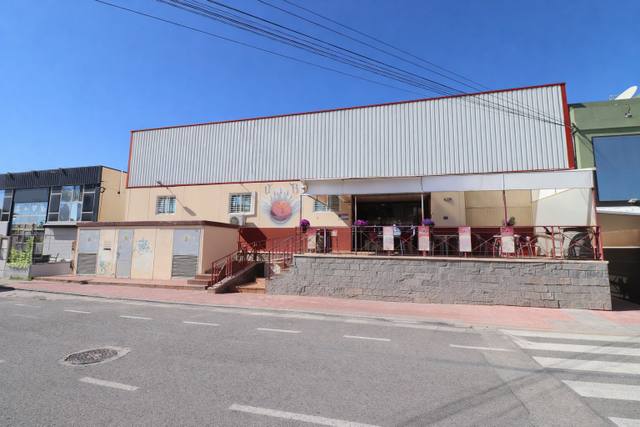
The municipality is made up of two very different worlds. In the village of Rojales beside the Segura you will find village houses, small blocks of flats and terraced homes around the church and the old bridge. You live among Spanish neighbours, with shops and bars within walking distance.
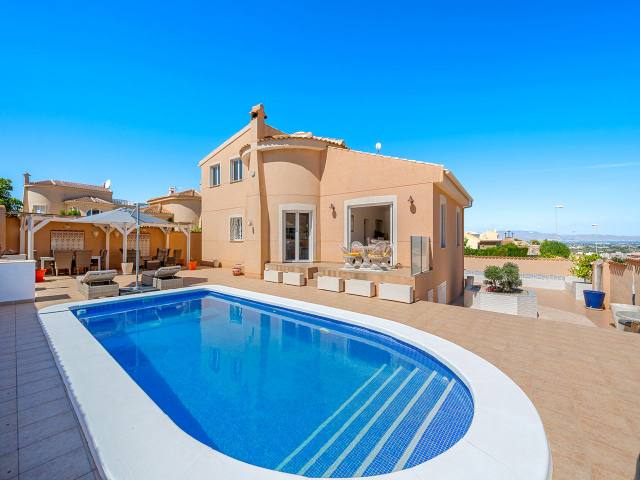
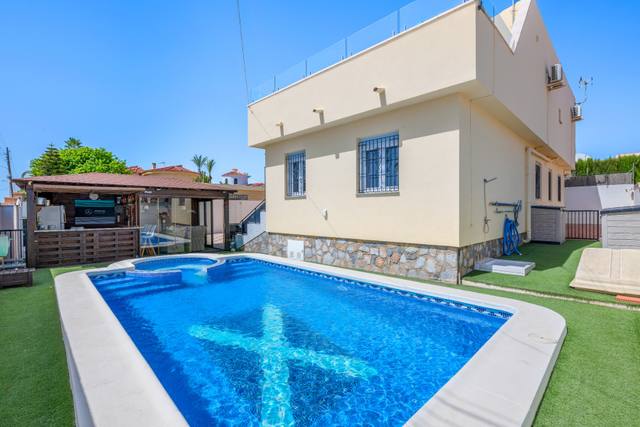
To the south lies Ciudad Quesada, developed from the 1970s onwards and now by far the largest part of the municipality. In and around Quesada you will find areas such as Doña Pepa and Lo Marabú, the golf area around La Marquesa, and a string of smaller urbanisations, each with its own name. Housing is mainly detached villas, bungalows (linked homes with their own outdoor space), quads and flats with a communal pool. New homes are still being built. The small hamlet of Las Heredades sits in open farmland.
- Village: Spanish character, compact, close to amenities
- Quesada and urbanisations: more space, greener, many second homes, a car is almost essential
Work and economy
The local economy relies mostly on services: hospitality, construction, home and garden maintenance, property, care and shops serving the international community. Tourism and residential tourism are the main drivers. The irrigated farmland along the Segura is still worked too, producing artichokes, peppers and citrus among other crops.
For jobs outside these sectors, many people commute to Torrevieja, Orihuela, Elche or Alicante. Without Spanish the local job market is limited; English mainly helps in hospitality and in services aimed at foreign residents. Remote working is common among newcomers. Bear in mind that public transport to workplaces in the region is limited, so in practice you will need a car.
Population
On 1 January 2025 Rojales had approximately 17,500 registered residents according to the INE. Of these, about 5,100 lived in the village, about 12,000 in Ciudad Quesada and about 240 in Las Heredades, with the rest scattered across the countryside. The real number of people living here is higher, as not everyone registers, and the population rises sharply during holiday periods.
Rojales is among the Spanish municipalities with the highest share of foreign residents: around 2018 more than two thirds held a foreign nationality, and in 2011 the figure was above 70%. The British are by far the largest group, with Germans a distant second. A good share of the foreign residents are retired. The old village, by contrast, is mainly Spanish, with its own community life built around music, fiestas and the parish.
Schools and education
State education follows the Valencian system, with teaching in Spanish and Valencian plus English.
- Nursery: municipal Escuela Infantil Los Pasos (first cycle, ages 0 to 3)
- Primary: one state infant and primary school in the village, on Calle Aitana (ages 3 to 12)
- Secondary: IES La Encantá in Rojales
- Adult education: a municipal adult education centre
There are also private options with an international profile, such as the Norwegian school Den Norske Skolen in Ciudad Quesada. English-language international schools are further afield in the region. The two music societies, La Lira and the Unión Musical Santa Cecilia, also run their own music schools. For state school places, watch for the annual application window set by the Conselleria d'Educació, usually in spring.
Distances from the centre
| Supermarket | approx. 0.5 km |
| Health centre (Avda. Constitución) | approx. 0.5 km |
| Pharmacy | approx. 0.3 km |
| Primary school | approx. 0.5 km |
| Beach (Guardamar del Segura) | approx. 9 km, 12 min |
| Golf course (La Marquesa) | approx. 3 km, 5 min |
| Hospital Universitario de Torrevieja | approx. 15 km, 20 min |
| Torrevieja (centre) | approx. 16 km, 20 min |
| Alicante (city) | approx. 50 km, 40 min |
| Alicante-Elche Airport | approx. 38 km, 30 min |
| Murcia Airport (Corvera) | approx. 70 km, 50 min |
Shops and markets
For everyday shopping there are supermarkets, bakeries, pharmacies and banks both in the village and in Ciudad Quesada. In Quesada many shops line the main road, and you will find shops and bars aimed at British and Scandinavian residents.
Every Thursday morning (roughly 8am to 2pm) there is a street market on Avenida Justo Quesada, close to the river, selling fruit, vegetables, clothing and household goods. Neighbouring Benijófar holds its market on Tuesday mornings, and the other villages nearby each have their own fixed market day, so there is a market somewhere almost every day.
At the Cuevas del Rodeo, local craftspeople sell their work. For larger purchases you drive to Torrevieja, Orihuela or the shopping centres near Alicante and Elche.
Culture and sights
For a town of its size, Rojales has a remarkable amount of heritage, much of it linked to water and irrigation.
- Puente de Carlos III: an eighteenth-century stone bridge with three arches, still in use
- Azud and noria: a weir and a large waterwheel that have channelled water from the Segura to the fields for centuries
- Cuevas del Rodeo: cave dwellings dug between the eighteenth and twentieth centuries, now artists' workshops and a small museum
- Molino de viento: the restored windmill on the hill above the village
- Aljibes de Gasparito: water cisterns from the early twentieth century
- Iglesia de San Pedro Apóstol: the parish church with its large dome, rebuilt after the 1829 earthquake
- Museo de la Huerta and the archaeology and palaeontology museum
The Teatro Capitol hosts a national festival of lullabies and Christmas carols every year.
Local festivals
| Festival | When | What |
|---|---|---|
| Fiesta de las Naciones (Ciudad Quesada) | early May, around Europe Day (9 May) | A three-day international festival on Plaza Blanca with stalls, music and food from many countries. |
| Romería de San Isidro | around 15 May, usually on a Sunday | The saint's statue is carried to El Recorral park for a mass, games and a free paella offered by the council. |
| Fiestas de San Pedro Apóstol and Moros y Cristianos | late June, around 29 June | The village's patron saint festivities, with Moors and Christians parades since 1978, music and gunpowder. |
| Fiestas de San Justo (Ciudad Quesada) | late July to early August | A festival week with a summer carnival, shows, a giant paella and closing fireworks. |
| Nuestra Señora del Rosario | around 7 October | Mass and procession in honour of the Virgen del Rosario, with festive events in the village. |
| Certamen Nacional de Nanas y Villancicos | first half of December | A national contest for lullabies, carols and choral singing, held since 1977. |
| Semana Santa | March or April | Processions by the local brotherhoods through the village, from Palm Sunday to Easter Sunday. |
Healthcare
Rojales falls under the Torrevieja public health department (Departament de Salut de Torrevieja), where it forms its own health zone. For a GP you go to the centro de salud on Avenida Constitución in the village. There are smaller medical posts (consultorios) in Lo Marabú in Ciudad Quesada and in Las Heredades, plus a municipal rehabilitation centre.
The nearest public hospital is Hospital Universitario de Torrevieja, approximately 15 km away. Hospital Vega Baja near Orihuela belongs to a different department. In 2023 Ribera opened a private clinic in Ciudad Quesada with a range of specialities, a dental unit and a weekday daytime emergency service, and there is a private hospital in Torrevieja. Pharmacies can be found in the village and in Quesada. To use public healthcare you need to be on the padrón and apply for a SIP card.
Outdoor leisure
This is a good base for outdoor life, although summers are very hot and walking or cycling is best done early or late in the day.
- Golf: La Marquesa, an 18-hole course in a flat valley just outside the village
- Lagunas de La Mata y Torrevieja: the natural park with its pink salt lakes, a small part of which lies within Rojales; ideal for cycling and birdwatching, flamingos included
- River Segura: walking and cycling along the banks and through the farmland
- Beaches: Guardamar, La Mata and Torrevieja are 10 to 20 minutes away
- Aquapark: a water park in Ciudad Quesada, open in the warmer months only
The hill with the windmill also offers fine views over the valley.
Indoor leisure
Indoor options are small in scale but varied. The Teatro Capitol stages concerts, theatre and the annual song festival in December. The municipal museums, the archaeology and palaeontology museum on Plaza de España and the Museo de la Huerta, make good outings with children.
At the Cuevas del Rodeo you can visit workshops and see how people once lived in cave homes. The local music societies give regular concerts. Ciudad Quesada has plenty of restaurants, cafés and bars with international food, as well as gyms and clubs run by the international community. For cinemas, major shopping or indoor leisure parks you drive to Torrevieja, Orihuela or Alicante.